What Makes a Team?
Why high-performing offshore teams are built on trust, clarity and shared responsibility
Within the maritime and offshore energy sectors, teamwork is often spoken about as though it develops naturally: put well-trained, experienced people together, provide procedures, allocate responsibilities and a team will emerge.
In reality, genuinely effective teams are rarely accidental.
Strong teams are built deliberately through leadership, communication, shared standards and mutual trust. They are sustained through consistency, accountability and psychological safety, particularly in high-pressure operational environments where people rely on one another not simply for productivity but for safety, wellbeing and performance under pressure.
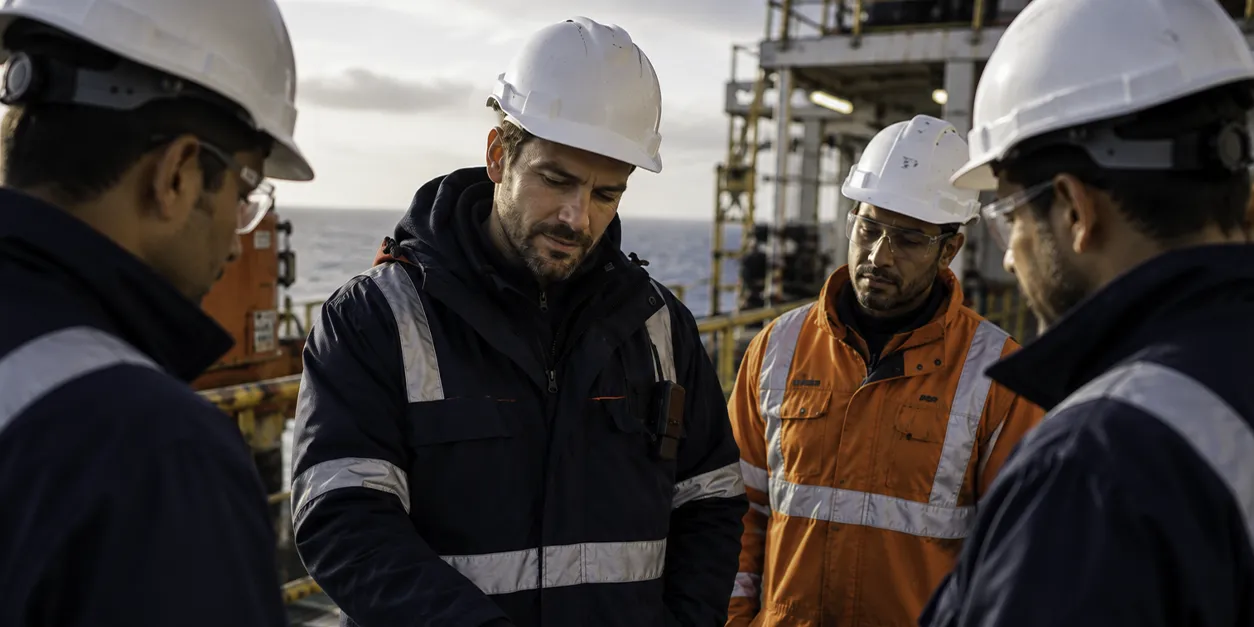
This is especially important offshore, where personnel frequently work in challenging environments, under demanding conditions and within multi-cultural, multi-disciplinary teams. Technical capability alone is not enough, and a collection of skilled individuals does not automatically become a cohesive team.
At this point it’s worth underlining that there is a distinction between a ‘group’ and a ‘team’, and it’s a distinction that matters. Inter-dependence and accountability are central to effective teams working collectively towards shared goals, rather than the independent ambitions of individuals operating in a group.
When teams function well, operational performance improves: communication becomes clearer, decision-making strengthens, people feel engaged, more valued and more willing to contribute.
When teams function poorly the warning signs are often visible long before incidents or operational failures occur:
- Communication becomes transactional; people stop speaking up
- Individuals withdraw
- Accountability weakens and trust deteriorates
- Groups start to work in isolation and become ‘siloed’
Over time, they become a reactive group rather than a collaborative team.
Effective leadership can never be about the individual leader in isolation; it exists within relationships, behaviours and group dynamics. Creating the conditions in which teams can perform consistently and sustainably begins with understanding what actually makes a team effective.
Teams are Built on Clarity
One of the most common causes of dysfunction within operational teams is ambiguity.
People may be uncertain about expectations; where their responsibilities overlap or remain undefined; communication is inconsistent and priorities can shift without explanation. In offshore environments where personnel changes, rotations and contractor relationships are common, these issues can quickly undermine cohesion.
High-performing teams typically operate with strong clarity around:
- Purpose
- Roles and responsibilities
- Standards of behaviour
- Decision-making authority
- Communication expectations
- Shared operational priorities
Importantly, clarity reduces friction.
When individuals understand what is expected – technically and behaviourally – trust becomes easier to establish. Teams spend less time navigating uncertainty and more time focusing on performance, problem-solving and collaboration.
This is one reason authentic leadership matters so significantly. Teams respond positively to leaders who are consistent, transparent and predictable in how they communicate and behave.
Leaders do not have to be perfect, but it is crucial that they remain consistent.
Psychological Safety is Operationally Critical
The term “psychological safety” is sometimes misunderstood as simply being about wellbeing or workplace comfort. In the safety critical activities of our industry, it is far more significant than that.
Psychological safety refers to an environment where individuals feel able to speak up, raise concerns, challenge decisions appropriately and admit mistakes without fear of humiliation or disproportionate criticism.
In offshore operations, this can directly influence safety outcomes.
Personnel who fear embarrassment or dismissal are less likely to report concerns early. They may hesitate to question decisions, clarify instructions or contribute observations that could prevent escalation.
Conversely, teams with strong psychological safety tend to communicate more openly and respond to challenges more effectively. This does not mean standards become relaxed; in truth, high-performing teams often maintain exceptionally high standards.
The difference is that accountability exists alongside trust. People feel respected enough to contribute honestly and responsible enough to uphold expectations and creating that culture requires mature leadership.
It requires leaders who listen properly, remain approachable under pressure and avoid creating environments driven by fear or blame.
Trust is Earned Through Behaviour
Trust within teams is not created through catchy slogans and soundbites, workshops or organisational statements. It is built through repeated everyday interactions.
People observe whether leaders:
- Follow through on commitments
- Communicate with clarity, consistency and honestly
- Remain composed under pressure
- Treat individuals fairly
- Are ‘authentic’ and accept accountability
- Demonstrate competence
Teams also observe whether colleagues support one another, share knowledge and behave with professionalism during difficult situations. In many offshore environments, crews work alongside one another for extended periods under challenging conditions and behaviour becomes highly visible.
This is where leadership credibility matters enormously.
Personnel are far more likely to engage positively when leaders demonstrate integrity through actions rather than simply authority through position.
Leadership competence extends beyond technical expertise. Yes, technical capability may initially establish credibility but interpersonal behaviour determines whether trust is sustained over time.
Strong Teams Require Adaptability
No offshore team operates within static conditions – operational priorities evolve and personnel rotate; unexpected events occur, commercial pressures change; technology develops and environmental conditions shift.
Rather than stoically rigid, effective teams are therefore adaptable and resourceful.
Adaptability depends heavily on communication, emotional intelligence and resilience. Teams that can discuss problems openly, learn from setbacks and adjust collaboratively tend to maintain performance more effectively during periods of pressure or uncertainty.
Leaders play a central role in shaping this adaptability. They encourage learning, remain calm during disruption and maintain perspective; attributes which help teams respond constructively rather than defensively.
Importantly, adaptable teams are not simply reactive. They are proactive in identifying risk, supporting one another and maintaining operational discipline while remaining flexible and innovative enough to manage change.
Leadership Shapes Team Culture Every Day
Team culture is shaped daily through the behaviour of the team leaders: how they communicate, how mistakes are handled and conflict is addressed, and how individuals are treated under pressure.
For organisations operating within offshore and maritime sectors, developing strong leaders means developing individuals who understand people as well as process.
Operational excellence is never achieved through technical systems alone. It is achieved through capable, accountable and trusted teams working together with clarity, confidence and shared purpose.