
Retrospective Assessment in Offshore Competence Assessment
When real work comes before paperwork
When working offshore, it is not always practical or possible to assess a candidate in the moment. The environment, operational pressures, and task criticality can make live assessment unrealistic.
Witnessing and accurately documenting a candidate’s work activities is central to both Grade Assessments (GA) and Individual Competence Assessments (ICA). However, offshore vessels and platforms often present situations where the job must take priority, and formal assessment activity has to wait.
This is where retrospective assessment plays an essential role.
Why live assessment is not always appropriate offshore
Offshore operations are dynamic and safety-critical. There are times when recording observations or completing assessment notes during a task would distract from the primary objective of working safely and effectively.
In these moments, the assessor’s responsibility is the same as everyone else’s on board. Focus on the task, protect people, and safeguard equipment.
Assessment can follow later.
A real-world offshore scenario
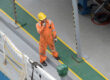
Consider a survey vessel with an ROV launch and recovery crew. During operations, the submersible becomes entangled and must be recovered quickly and safely.
This is a high-value asset, and leaving it stranded on the seabed is not an option.
At this point, the priority is not assessment documentation. The focus must be on:
-
Recovering the ROV or AUV safely
-
Coordinating the team effectively
-
Managing risk under pressure
The assessor should not be taking notes or recording observations during the operation. Their attention must remain on the task, just like the rest of the crew.
What happens after the task is complete
Once the operation is finished, or at the end of the shift, the assessor can then reflect on what they witnessed and document it appropriately.
This retrospective assessment should consider:
-
The background to the incident, including time of day, weather conditions, and situation overview
-
The role of the candidate during the operation
-
How the candidate reacted and responded
-
How they worked with colleagues, where applicable
-
What was done well and where improvement may be needed
Providing feedback at this stage is vital. Constructive feedback supports learning, reinforces good practice, and contributes directly to a candidate’s professional development.
What is a retrospective assessment
A retrospective assessment is a first-hand witness account recorded after the event, based on real work carried out in a live operational environment.
At MTCS, this type of evidence is highly valued because it is:
-
Primary evidence
-
Based on real operations, not simulations
-
Observed directly by experienced assessors
It reflects how competence is demonstrated under genuine offshore conditions.
Retrospective assessment in day-to-day operations
While the example above describes an infrequent and high-pressure event, retrospective assessment is not limited to emergency situations.
It can also be applied during routine offshore operations where live documentation would be impractical or disruptive. The key principle remains the same.
Recording evidence must never take priority over safe and effective task execution.
Insight from MTCS Managing Director
Richard Warburton, Managing Director of MTCS (UK) Ltd, explains:
“A number of assessors have quite rightly said that they find it difficult to assess a candidate whilst doing their own job as well.”
He continues:
“Yes, you have a job to do in leading your team and supervising the project. However, as you do that, you may see that the project is going well and the team is performing as expected. That is great evidence that competence is being demonstrated.”
This evidence may be recalled later, sometimes days after the operation, and still provide strong support for an assessment decision.
“If operations are completed safely, on time, and with nothing untoward to report, this all makes for excellent evidence.”
Assessors can then provide feedback when next meeting the candidate and may also consider input from other colleagues who were involved.
Trust assessor judgement and experience
MTCS recognises that assessors are experienced professionals with deep operational knowledge. They understand their teams, the work environment, and what good performance looks like.
If something does not look right, assessors will notice. If something is done well, they will recognise that too.
Relying on professional judgement, time-served experience, and first-hand observation is a fundamental part of effective retrospective assessment.
Key takeaway
Retrospective assessment allows competence to be evidenced without compromising safety or operational focus.
When done correctly, it captures real performance in real conditions and supports meaningful feedback and development for offshore personnel.