An Approved Witness is a person with technical authority in a relevant discipline who can observe, verify, and sign evidence of a candidate’s competence in the workplace. In an MTCS competence assessment, Witnesses play a critical role, particularly when a qualified Skills Assessor is not available at the worksite. Understanding what this role involves, and who can do it, is important for supervisors, managers, and offshore professionals at every level.
Why Does the Witness Role Matter Offshore?
Competence cannot be achieved in a classroom. It can only be demonstrated in the real workplace, where conditions are genuine and the stakes are real. This means that the people best placed to observe and verify competence are often the experienced professionals already working alongside candidates offshore.
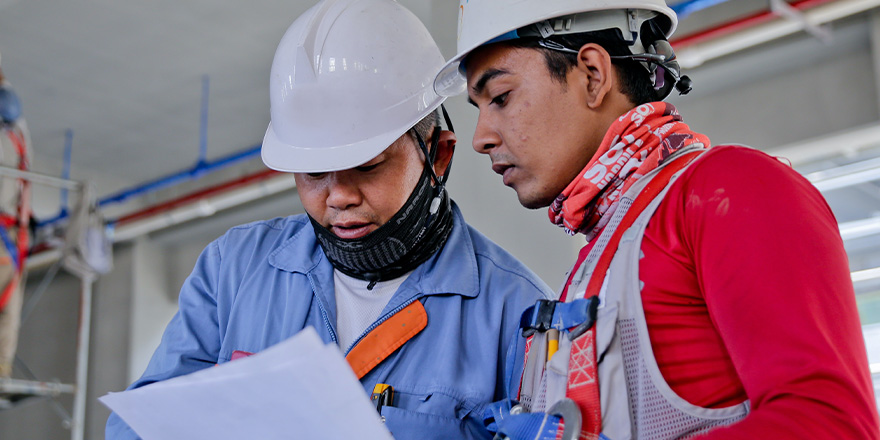
When a qualified Skills Assessor is not present, a Witness steps in to observe performance, record what the candidate did, and sign the relevant evidence. Without Witnesses fulfilling this role effectively, competence schemes slow down, evidence gaps appear, and candidates cannot progress.
Who Can Act as an Approved Witness?
An Approved Witness is typically someone with direct technical knowledge of the discipline being assessed. This commonly includes:
- Senior Pilot Technicians (Senior PTs)
- Supervisors with relevant technical authority
- Superintendents with direct knowledge of the work being assessed
To become an Approved Witness for MTCS, individuals complete the Competence in the Workplace course. On completion, they are formally recognised by MTCS and are qualified to sign competence evidence in the appropriate context.
What Does an Approved Witness Actually Do?
The Witness role is straightforward in practice. When a candidate performs a task, the Witness observes the performance and records what they saw. This is typically a short paragraph describing what the candidate did, written on an MTCS observation report or competence form. It does not need to be lengthy. It needs to be accurate, timely, and specific to what was observed.
This type of observational evidence is the most valuable in any competence portfolio. MTCS recommends that at least 70 per cent of a candidate’s evidence portfolio consists of observational records of this kind.
What Is the Competence in the Workplace Course?
The Competence in the Workplace course is designed to prepare the range of professionals involved in offshore competence assessment. It is suitable for:
- HR personnel who want a better understanding of the competence assessment process
- Supervisors and Managers who sign competence-related documentation as an Approved Expert Witness
- Trained and qualified Skills Assessors who want to refresh their knowledge
- Technical Authorities and Witnesses who sign documentation in the absence of a qualified Assessor
On completion, participants are recognised as an Approved Witness for MTCS and gain a solid understanding of how to formally assess individuals in the workplace.
How Does a Good Witness Reduce Workload for Everyone?
One of the biggest challenges in offshore competence schemes is unnecessary paperwork. This usually happens when evidence is collected without a plan, or when Witnesses do not know what to look for or how to record it.
A confident, well-prepared Witness changes this completely. They recognise assessment opportunities as they arise, such as a breakdown, a fault condition, or a complex operation, and they record what they observed in a short, clear paragraph. That single observation report can be powerful primary evidence. Good assessment planning, knowing in advance what will be assessed, where, when, and how, removes the paperwork burden and makes the whole process run efficiently.
Why Management Buy-In Makes or Breaks a Competence Scheme
The most common reason competence schemes fail is a lack of management support. When Witnesses and Supervisors are not trained, or when the process is left entirely to the candidate and the certification body, the scheme loses momentum. Competence requires the active involvement of everyone at the worksite.
When leadership invests in preparing their Supervisors and Witnesses properly, the competence scheme becomes part of the team’s working culture rather than a separate administrative burden. A competent team ensures that systems are operated and maintained safely and reliably. That is the real return on investment.
Frequently Asked Questions
What is the difference between a Witness and a Skills Assessor?
A Skills Assessor is a formally trained and qualified professional who plans and conducts competence assessments. A Witness observes and records evidence but does not conduct formal assessments independently. Both roles are essential to the MTCS competence process.
Does a Witness need to be MTCS-certified?
To act as an Approved Witness for MTCS, the individual must have completed the Competence in the Workplace course and hold technical authority in the relevant discipline. This ensures the evidence they sign carries the weight required for MTCS certification.
Can a Supervisor be both a Witness and an Assessor?
Yes. A Supervisor who holds a Skills Assessor qualification can act in both capacities. Many offshore teams benefit from having supervisors who are qualified to both assess and witness, as this gives the competence scheme greater flexibility at the worksite.
Find out more about our corporate training courses, including our Skills Assessor and Workplace Trainer courses. To speak to the team, visit mtcsuk.com/contact/.